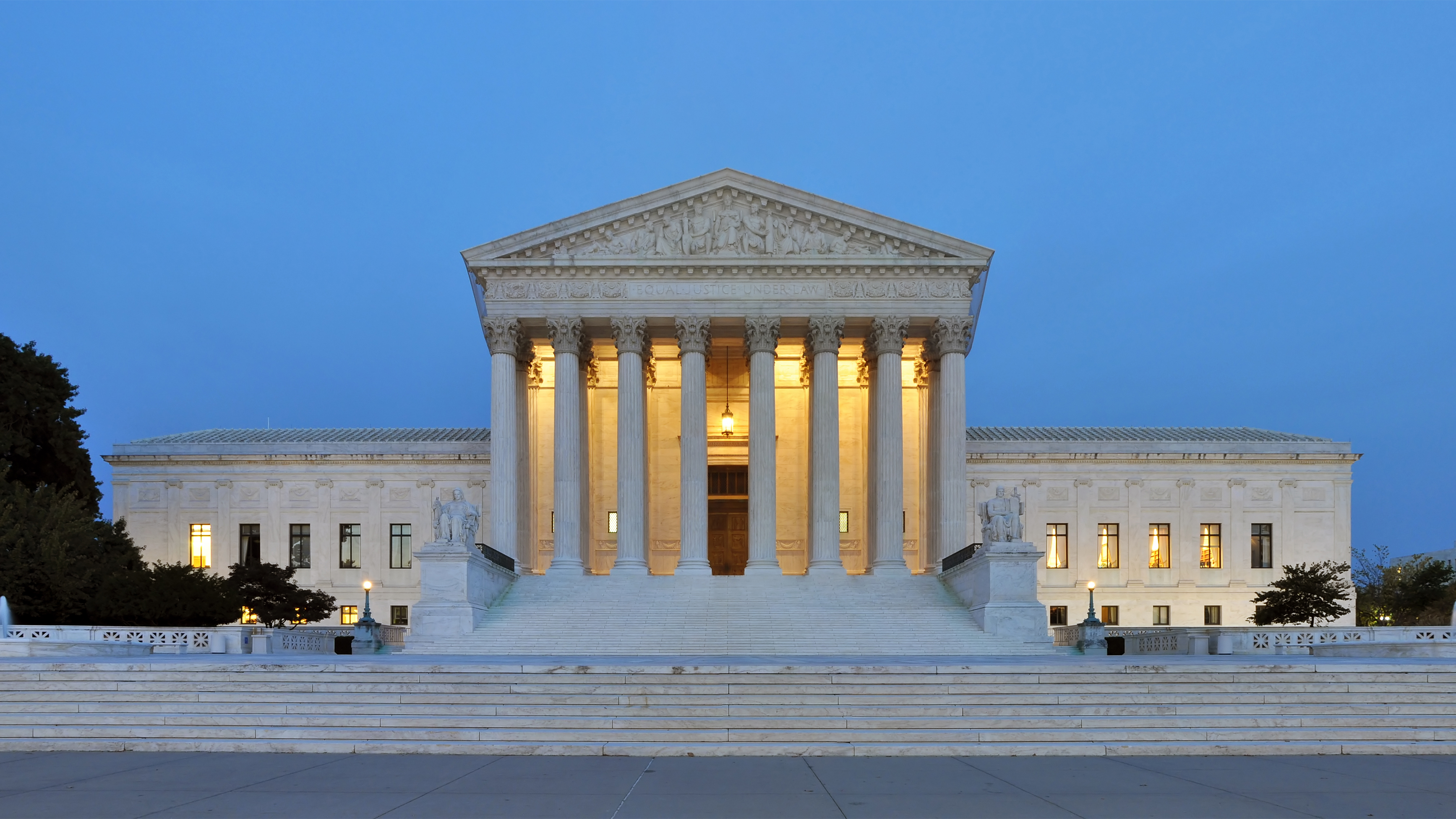
The U.S. Supreme Court gave us a resounding victory for freedom when it decided New York State Rifle & Pistol Association v. Bruen in 2022. The decision affirmed that our Second Amendment rights do not cease to exist at our front doors. It also voided numerous unconstitutional policies that were in place before the ruling; nevertheless, opponents of our Second Amendment-protected freedom have not given up.
“The U.S. Supreme Court declared New York’s ‘good-cause’ requirement for the right to bear arms outside the home unconstitutional, but the struggle for freedom is hardly over,” wrote Stephen Halbrook, a constitutional attorney, for America’s 1st Freedom at the time.
Halbrook’s words were, indeed, prophetic, as the actions by anti-gun politicians since Bruen have been desperate, unconstitutional and rebellious toward the high court.
Last July in Massachusetts, Gov. Maura Healey (D) signed legislation that the NRA Institute for Legislative Action (ILA) has said is “one of the most-extreme gun-control bills in the country.” Healey then used an “emergency preamble” to force it into effect without any input from citizens of the Bay State.
“With the swipe of a pen, Governor Healey has shamelessly circumvented Massachusetts’ political process and expedited the effective date of her radical gun-control law in the Commonwealth. This extreme law will not go unchecked, and the NRA will be launching a challenge to restore the rights guaranteed to Bay Staters by the U.S. Constitution,” said Randy Kozuch, executive director of NRA-ILA.
At the start of the year, the Hawaii State Supreme Court thumbed its nose at the U.S. Supreme Court by claiming the “Spirit of Aloha” is a legal rationale that trumps the high court.
“The spirit of Aloha clashes with a federally mandated lifestyle that lets citizens walk around with deadly weapons during day-to-day activities,” said the Hawaii State Supreme Court decision. “Article I, section 17 of the Hawaii Constitution mirrors the Second Amendment to the United States Constitution,” says the decision. “We read those words differently than the current United States Supreme Court. We hold that in Hawaii there is no state constitutional right to carry a firearm in public.”
The Hawaiian court went on to argue that the Bruen precedent is somehow outdated—despite being decided in 2022.
Meanwhile in California, lawmakers passed new legislation that would have, among other things, banned Californians—even those with hard-to-obtain concealed-carry permits—from carrying concealed firearms in more than two dozen places, such as churches, banks, hospitals, and on public transportation. All of this stands in direct opposition to Bruen; as a result, U.S. District Judge Cormac Carney called it “sweeping, repugnant to the Second Amendment, and openly defiant of the Supreme Court.”
After a lot of legal wrangling, the injunction blocking the legislation from going into effect was put back in place. But the legal battles are hardly over; indeed, California Gov. Gavin Newsom has openly floated the idea of adding a 28th Amendment to the Constitution that would effectively gut the Second Amendment.
Before California acted, New York openly defied the Bruen decision by passing, among many other infringements, “sensitive-place” restrictions that ban citizens from lawfully carrying concealed in much of the state.
Supreme Court Justice Clarence Thomas foresaw this when authoring the opinion in Bruen: “Put simply, there is no historical basis for New York to effectively declare the island of Manhattan a ‘sensitive place’ simply because it is crowded and protected generally by the New York City Police Department.”
Nevertheless, this is what New York and a handful of other states effectively did. Legislators in New Jersey, Illinois and several other states have also passed expansive sensitive-place restrictions on this constitutional right. In each, the NRA has been ready to challenge them and make sure that your Second Amendment rights are protected.
So, as we reach the end of 2024, it is clear that the struggle for our freedom is continuing.
Most Popular