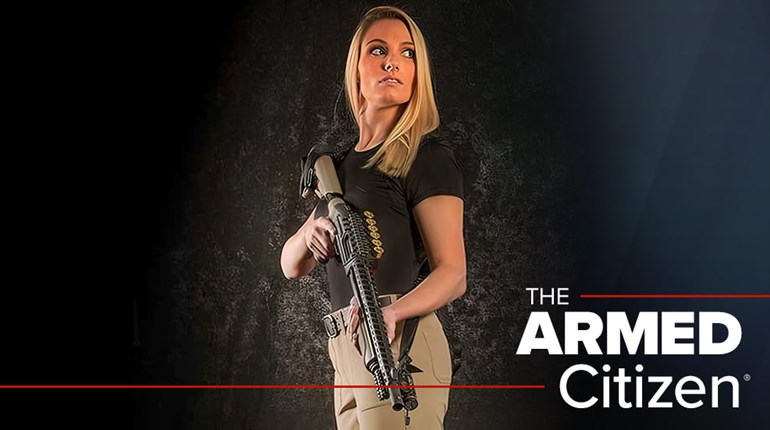
When I opened my mailbox to find a campaign flyer showing Winsome Earle-Sears in business clothes holding an AR-15, she had my full attention. She went on to win the election to become the first black woman to serve as lieutenant governor of Virginia. Now she had the nation’s attention.
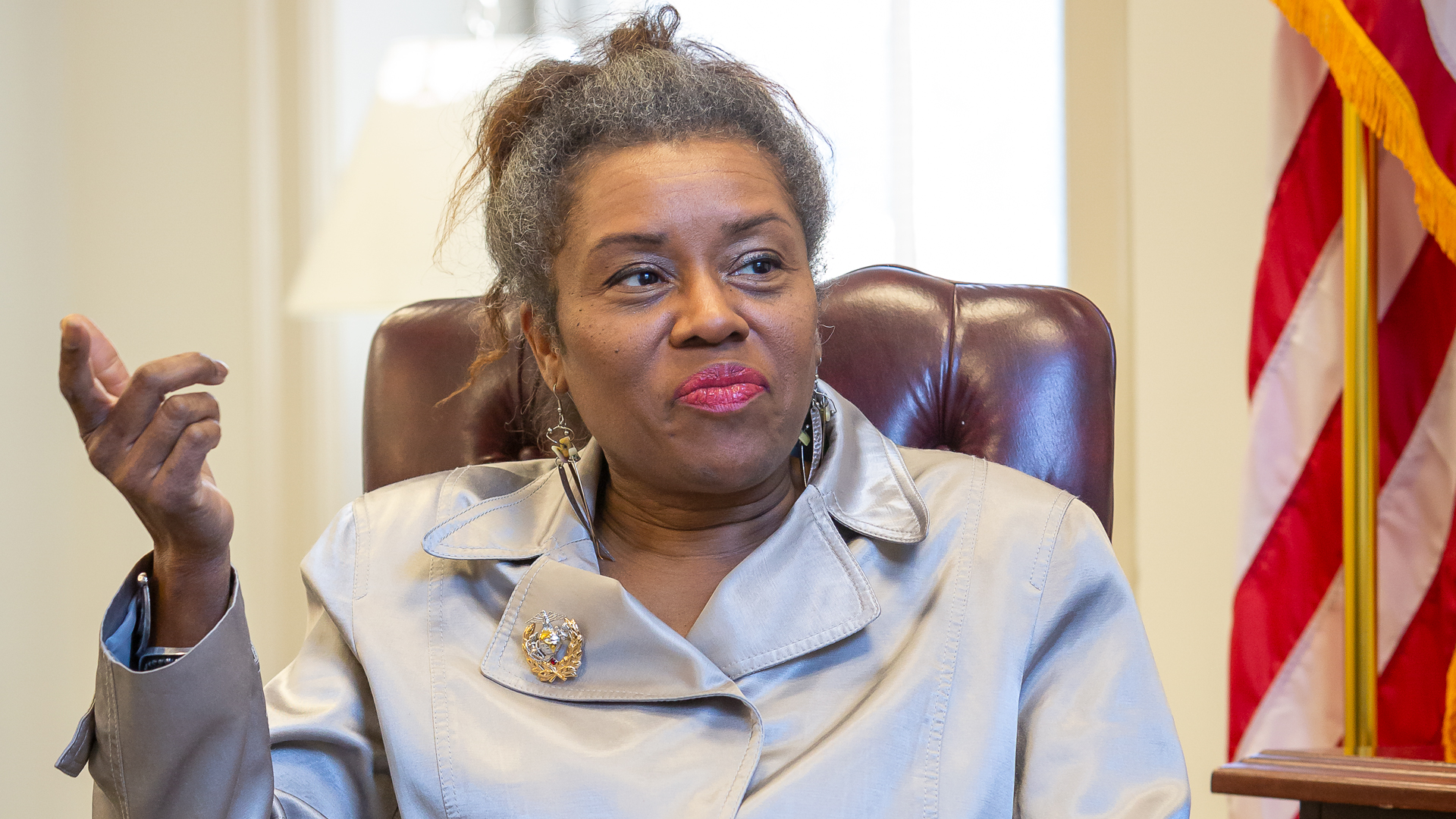
Months later, as I walked up to the historic three-story, brick-and-terra-cotta building where I was to meet Sears in Richmond, Va., on a cold, sunny President’s Day, I thought about how the building had been renamed in 2005 after Oliver Hill, a civil-rights attorney who worked to end segregation and who was the first black American to win a seat on the Richmond City Council in 1949. I imagined Mr. Hill would be pleased to see Sears, the first black woman and the first Jamaican-born American citizen elected to statewide office in Virginia, in the office of lieutenant governor.
Sears does appear to be enjoying the elected position; for example, she discovered her gavel missing once when it was time to open a Senate session, so she used her high-heel shoe to pound the chamber to attention. “One shoe can change a life,” she quipped. “Ask Cinderella.”
But, as you’ll see from the interview, she takes her work—literally defending the American dream in every way her position allows—very seriously.
 A1F: You were born in Jamaica and spent much of your childhood shuttling back and forth between there and the U.S. Did that influence your opinion about gun rights in America?
Sears: When I was very young, we had a prime minister [Michael Manley] come to power who declared Jamaica would be a “democrat socialist” country—where have you heard that before? And so, he nationalized everything and brought Castro over from Cuba with Russian money. They started building schools and whatever else, and people understood that their money and whatever profit their business had was no longer theirs. And that created a lot of economic instability and a lot of brain-drain. Some of the people left, and they tried to run with as much money as they could.
And you know, you can only take so much. It destroyed Jamaica, and they’re only just now recovering. So, I knew what the IMF [International Monetary Fund] was when I was 11 years old; I knew about the World Bank. I knew about all that at that young age because so much of our lives was impacted by those socialist positions.
That’s why I’m a Republican, you know? I am a capitalist. I understand that’s the best system that we have going so far. Nothing invented has topped it. So, I did see guns in a sense because of that unrest. I saw shootings and that sort of thing. I was too young to understand gun rights, if you will, but I certainly could understand the economic and the social unrest. And powerlessness.
A1F: So, was your first time using a firearm when you became a U.S. Marine?
Sears: Yeah, I’d say so, up close and personal. I saw the police with it. But, yeah, no shooting experience like that.
A1F: Okay, so what did you think that first time?
Sears: I don’t know that I really thought anything of it. I mean, it was just part and parcel of being a Marine. They throw a rifle in your hand and tell you, “This is your best friend and you better know how to pull it down within two minutes.” You know, all the way down to the cotter pin. It was just another new thing to learn how to do. It’s part of being a Marine.
A1F: Your campaign flyer showing you proudly posing with an AR-15 certainly got my attention in a good way. Did that get strong reactions?
Sears: The whole gamut! I’ll give you an example. I was meeting with a group of black business owners from the Southwest. I was trying to feel them out and I said, “You know, that campaign flyer with me with the gun—” and one black woman stopped me. She said, “Girl, we don’t care about that. I’m packing right now. What we want to know is about what economic principles you’re going to deliver for us. On this side of the mountain, guns are not the problem for us.” So, you’ve got the urban view as well as the rural view, and I guess it depends on where you grow up sometimes. Once again it shows that the black community is not so monolithic. We are not. Even in the urban areas, the largest-growing segment of gun owners are females, which means black women! And so, you’re going to come and get my gun? I don’t think so.
And then there were some Republicans who said I was too openly for guns. And some Republicans that loved guns. I remember talking with a man who didn’t know me, and I said, “What do you think about this Winsome Sears?” He said, “Who, the one with the gun? Oh, I got her.” So, it ran the gamut.
A1F: How about personal shooting? Do you still go to the range? Do you like shooting your AR, or handguns, or … ?
Sears: Actually, I love skeet shooting. Oh boy. Because it’s a different kind of shooting. It takes skill. You have to determine where you think the target is going to be. To me, that’s the best feeling. Yeah, I love it. I love it.
The governor [Glenn Youngkin] and I, when we were campaigning during the convention cycle, we were all down at the range and he said, “Hey, Winsome, you want to shoot with me?” and I said, “Sure!” So, there we were. He hit some clays and I hit some clays; I don’t know what anybody else did. I won it, by the way, if I’m not mistaken.
A1F: You took a step back from politics and then you came back to it. What inspired you to run for lieutenant governor?
Sears: Yeah, 20 years later. So just call me ‘Little Mo’ because Moses came back after 40 and I came back after 20!
I looked at our education scores, and they were bad. They’re still bad. It’s going to take us some time to come out of this. When we look at the NAEP scores—the national assessment for educational proficiency—I get concerned. I really concentrate on two subjects: math and reading comprehension. It tells us that when it comes to those two subjects, especially math, by the time the children in Virginia reach the eighth grade, 35% of Asian children can’t do math, 45% of white children, 70% of Latino children and 84% of black children can’t do math!
It’s time we come back together ... . You can either light a candle or you can curse the darkness. I lit the candle.
So, our children aren’t learning. We have got to figure this out. Our children need to be able to compete on a global scale, in a global market. So that’s why I got in. I’m a former vice president of the state board of education, and we’ve tried everything. And none of it is working, so it’s time now for parents to make the decision on where their children should go to school. The money should follow the child instead of a brick building. The worship of the building is over. So that’s one reason I ran.
And then I saw the racial strife happening, the burnings, the lootings, the shootings … and I just thought I’m the one who can talk to that—that pain and that divisiveness—to say it’s time we come back together. Because, again, we are not on this planet by ourselves. We can’t have another civil war, and it just felt like that’s where we were going. I saw relationships destroyed, friendships destroyed, because of this black/white thing. So, I figured I could speak to it. You can either light a candle or you can curse the darkness. I lit the candle because to light the candle is to find a solution. To complain about the darkness is to be a victim.
We have that saying in church that I may not be what I’m supposed to be, but I ain’t what I used to be. And again, that’s America. Fits and starts, but she’s getting there. She’s getting there.
 A1F: You are the first woman to serve as lieutenant governor of Virginia, plus you’re the first woman of color and the first Jamaican-born American citizen elected to statewide office in Virginia. It seems like these milestones should’ve received more media attention than they did. Were you expecting such a muted media response?
Sears: It doesn’t bother me! It doesn’t bother me a bit because I didn’t run for that anyway. I ran to make those accomplishments, for little kids to say, “Well, if Winsome can do it, then I can do it.” I keep telling the little children wherever I go: “I didn’t do anything special to get here. All I did was stay in school and study.” Because if they think that I had access, you know, I had money, I had connections, whatever, then they may not even try. I want them to understand that if I can come to a place that’s not my country, not my culture and make it, then they can, too.
Furthermore, I’m the one with the gavel, so whether they acknowledge me or not doesn’t make a bit of difference to me. Besides, the praises of men are fickle.
A1F: You talked a little bit about not being a monolithic culture and how different black people view gun ownership differently, but there has been a cultural shift toward becoming more pro-gun. I wonder if you have any insight into that shift.
Sears: I think it’s not even just a gun shift so much as questioning of political beliefs because, really, black people, Hispanic people and Asian people generally are more conservative in their views—they just don’t vote that way sometimes. There is more of a “Wait a minute … Why do we vote the way that we vote?” For me, the new water fountains are the political party. There’s a group of elites somewhere that is trying to tell the rest of us that we can’t drink at the Republican water fountain, or the Green party water fountain or whatever other political party water fountains there are. The only one we can drink at is the Democrat party water fountain. And we’re saying no, we’re adults. We’re grown. We will make those decisions for us. You make your decision and we will make ours.
And guns are a part of that. Because if I put up a sign on my door, in my yard, that says, I have a gun and my neighbor doesn’t, where do you think the robbers are going to go? And by the way, while I’m waiting for the cops to come, if you are breaking into my home, what am I going to do? I can’t call the social worker.
Another thing: We have black gun manufacturers, we have black bullet manufacturers, we have black gun shops here. And what are we going to do—tell them to close their businesses? I don’t think so. Absolutely not.
We’re here, and we’re not backing down.
 A1F: How do you think you can use your role to help restore and defend freedom in general, but especially our Second Amendment rights here in Virginia?
Sears: I campaigned on that, you know, that we’re not giving any of it up, but you do need to have control of enough votes to make that happen. And so, we have the governor’s mansion, we have the House now, but we don’t have the Senate. Politics, as you know, is the art of the possible. So, you take what you can get and then next time you come back and you ask for more. Sometimes our voters may be a little bit disillusioned that we didn’t get what we wanted—the whole thing. But sometimes a win is incremental. At least we’re there now. We get this, we roll back certain things, and then we try to change some minds and come back next year and fight for some more.
So, I would say to your members: Stay the course. Don’t leave the battlefield. You lose a hundred percent of the battles you walk away from. Join a local political party. Donate money. Be the candidate, but if you’re not going to be the candidate, help the candidate. Go knock on doors, put a sign in your yard.
Remember that our government is we the people—not we the politicians, not we the elite. It’s we the people! Don’t be afraid, and don’t be caught napping. You’re the people.
Most Popular