In an interesting turn of fortune, retail magnate Kroger Co. showed a decrease in profits a year after it banned the sale of firearms in its subsidiary Fred Meyer stores.
As of early 2018, Kroger Co. was one of the world’s largest retail magnates and operated 2,782 supermarkets under various names throughout 35 states. The company’s operating profit was $2.1 billion in 2017, and it announced that it expected sales growth to range from 2.0 percent to 2.5 percent for the year 2018.
However, those projections proved wrong. Kroger’s total sales decreased by 1.2 percent to $121.2 billion in 2018 compared to $122.7 billion in 2017, a recent company press release revealed.
As profits soared for retail competitors including Target and Walmart in 2018, Kroger’s underperformance was glaring.
Kroger is now struggling to regain momentum in the market.
These developments are particularly thought-provoking in light of a series of corporate decisions Kroger enacted in March 2018 after the Parkland shooting, culminating in its final ban of firearm sales from its retail outlets.
- “Kroger, the nation’s largest grocery chain, said it will stop selling guns and ammunition to customers who are younger than 21 years old.”
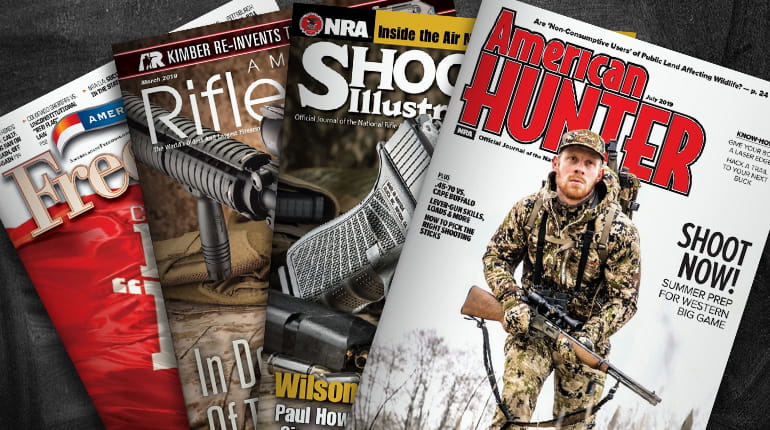
- “Kroger to no longer sell print magazines that feature assault rifles”.
A week after banning firearm publications from being sold in its stores, a Kroger spokeswoman sent the email pronouncement: “Fred Meyer has made a business decision to exit the firearms category.”
Fred Meyer sold guns at nearly 45 of its 132 stores in Oregon, Washington, Idaho and Alaska.
However, the company was undeterred by the potential loss of business and decided to forge ahead with its plan—seemingly without concern for its law-abiding pro-gun customers.
Business decisions—especially those founded on shaky grounds—have consequences. Some rich executives are so out of touch with the rest of society that they believe losing customers and business cannot hurt their hoarded wealth. But just as small gains can make large profits, little losses can add up.
Any good businessperson knows that political bias and boldness are not the qualities needed to successfully run a company.
Proof of that can be seen in the financial pullback of customers from overbearing anti-gun giants like Citigroup and Dick’s Sporting Goods, both of which are losing business to due their self-inflicted stupidity.
Recently, Citigroup CEO Michael Corbat admitted that customers are taking business away from Citigroup in response to its overreaching anti-gun policy, although he attempted to minimize the consequences of the backlash.
“We’ve had people who brought business to us because we put our own policy forward and we’ve had people take business from us around the policy,” Citigroup’s Corbat said, adding that neither customer support nor withdrawal have affected his company’s so-called “bottom line.”
Dick’s Sporting Goods has been unable to deny the costliness of its unwelcome blunder into the political arena—with Dick’s admitting that its anti-gun policy has cost about $150 million in sales.That amount equals about 1.7 percent of the company’s annual revenue.
CEO Ed Stack claimed that the wreck in company profits was worth it and defended his flimsy business judgment, stating his belief that people must ”stand up.” As Dick’s profits continue to plunge, one wonders what financial foundation his company will be left standing on.
Is Kroger’s 2018 decline a result of its anti-gun stance?
If so, it will be interesting to watch how the company tries to wade through a financial mire.
What stands out in all this is that many major businesses in America seem to believe that the “little people”—ordinary, working-class citizens without money or power—don’t count.
Let them continue to alienate their customers and lose business. Then maybe they will learn that ordinary people are the ones who count the most.
Most Popular